
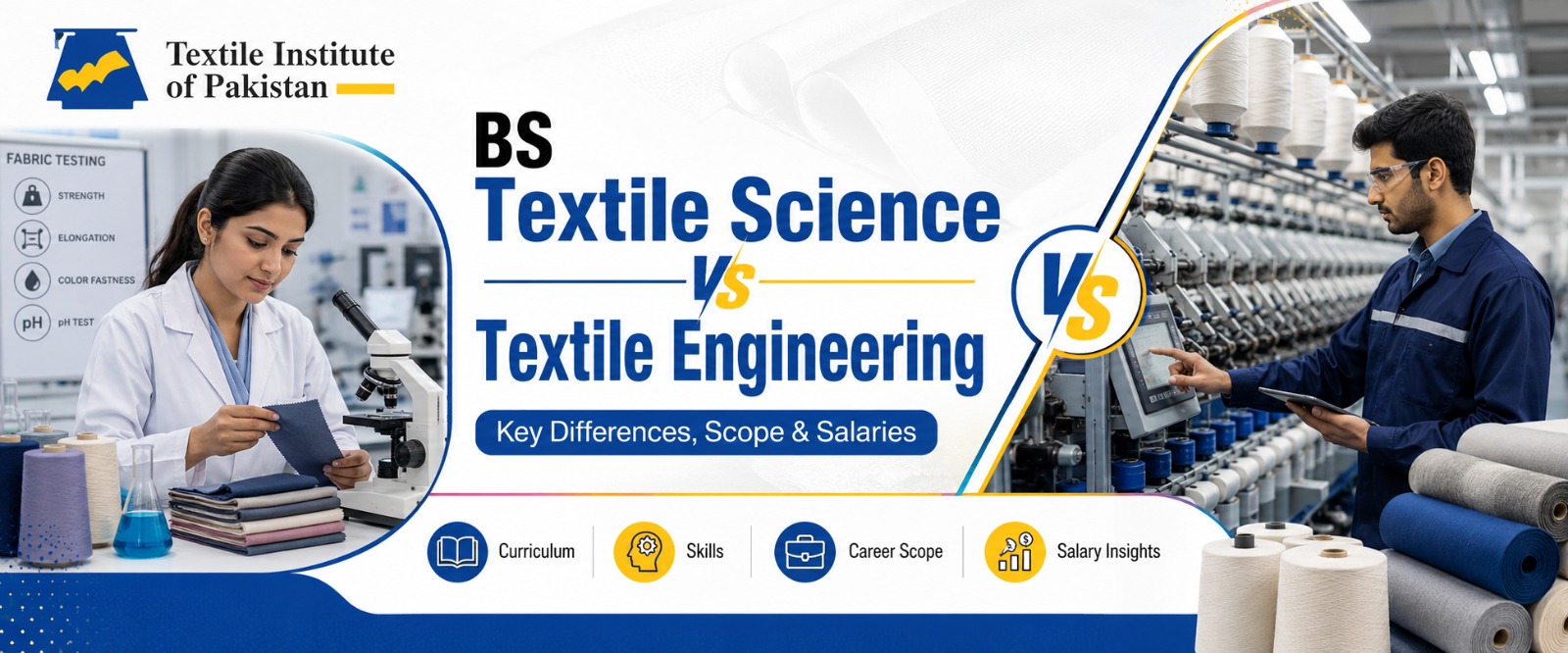
Choosing the right degree is one of the most important decisions for students planning a career in Pakistan’s textile industry. Since textiles are among the country’s largest industries, many students explore academic programs to help them build a successful future. Two of the most popular options are Sustainable Textiles and Textile Engineering.
A common question among students is: which degree offers better career opportunities, higher salaries, and stronger industry demand?
The answer depends on your interests, career goals, and the type of work you want to do in the textile sector. While both fields are connected to textiles, they focus on different areas of the industry.
This guide will help students understand the differences between these two programs, their career opportunities, salaries, industry demand, and future scope. If you are researching Sustainable Textiles vs textile engineering in Pakistan, this article will provide everything you need to make an informed decision.
Understanding Pakistan's Textile Industry
Before comparing the two degrees, it is important to understand why textile education matters.
Pakistan’s textile sector is the largest manufacturing industry in the country. It contributes significantly to exports and provides employment to millions of people. Textile companies are constantly searching for qualified professionals who can improve production, develop new products, maintain quality standards, and support innovation.
As the industry adopts modern technology and sustainable production methods, the demand for educated professionals continues to increase.
This creates strong opportunities for graduates from both Sustainable Textiles and Textile Engineering programs.
What is Sustainable Textiles?
Sustainable Textiles is a specialized degree that focuses on the scientific aspects of textiles. Students learn about fibers, yarns, fabrics, textile chemistry, textile testing, dyeing, finishing, and product development.
The program combines science, research, laboratory work, and industrial applications.
Students gain knowledge about:
- Fiber science
- Fabric technology
- Textile chemistry
- Dyeing processes
- Printing techniques
- Textile testing
- Smart textiles
- Product development
- Quality assurance
- Sustainability in textiles
The Sustainable Textiles program at the Textile Institute of Pakistan is designed to prepare students for careers in textile manufacturing, quality management, research, innovation, and product development.
What is Textile Engineering?
Textile Engineering focuses on engineering principles used in textile manufacturing.
The degree emphasizes machinery, production systems, industrial operations, and technical management.
Students learn about:
- Textile machinery
- Manufacturing systems
- Production planning
- Industrial engineering
- Mechanical processes
- Automation
- Plant management
- Process optimization
- Manufacturing efficiency
- Engineering mathematics
Textile Engineering graduates often work closely with machinery, production lines, factory operations, and technical systems.
Sustainable Textiles vs Textile Engineering Pakistan
Although both programs belong to the textile sector, their focus areas are different.
Sustainable Textiles Focus
Sustainable Textiles concentrates on understanding textile materials and their behavior.
Students study:
- Fibers
- Fabrics
- Chemicals
- Textile testing
- Quality management
- Product innovation
Textile Engineering Focus
Textile Engineering focuses on production systems and machinery.
Students study:
- Manufacturing equipment
- Production processes
- Factory management
- Automation systems
- Technical operations
In simple terms, Sustainable Textiles focuses more on the materials, while Textile Engineering focuses more on the machines and production systems.
Major Differences Between Sustainable Textiles and Textile Engineering
Educational Approach
Sustainable Textiles follows a science-based approach.
Students spend significant time learning about textile materials, testing procedures, research methods, and product development.
Textile Engineering follows an engineering-based approach.
Students learn mathematics, manufacturing processes, machinery operations, and industrial systems.
Laboratory Work
Sustainable Textiles includes extensive laboratory work related to fibers, fabrics, dyes, chemicals, and quality testing.
Engineering students spend more time working with machinery and production equipment.
Research Opportunities
Sustainable Textiles provides strong exposure to research and innovation.
Students interested in developing new fabrics or improving textile performance often prefer this field.
Textile Engineering focuses more on improving manufacturing efficiency and industrial performance.
Career Direction
Sustainable Textiles graduates often work in:
- Quality assurance
- Textile testing
- Product development
- Research
- Textile chemistry
- Merchandising
Textile Engineering graduates often work in:
- Production management
- Plant operations
- Technical supervision
- Manufacturing systems
- Factory management
Which Degree is Easier?
Students often ask which program is easier.
The answer depends on individual strengths.
Students who enjoy:
- Science
- Laboratory work
- Research
- Product development
may find Sustainable Textiles more suitable.
Students who enjoy:
- Mathematics
- Machines
- Technical systems
- Industrial operations
may prefer Textile Engineering.
Neither degree is easy or difficult by itself. Success depends on interest and dedication.
Course Comparison
Sustainable Textiles Subjects
Common subjects include:
- Fiber Science
- Textile Chemistry
- Fabric Technology
- Textile Testing
- Dyeing and Printing
- Smart Textiles
- Quality Assurance
- Textile Research
- Sustainability
Textile Engineering Subjects
Common subjects include:
- Engineering Mathematics
- Manufacturing Systems
- Textile Machinery
- Industrial Engineering
- Production Management
- Automation
- Process Engineering
- Mechanical Systems
The curriculum reflects the different goals of each program.
Industry Demand in Pakistan
The textile industry requires professionals from both fields.
However, hiring patterns may vary depending on company needs.
Demand for Sustainable Textiles Graduates
Many companies seek Sustainable Textiles graduates for:
- Quality control
- Textile testing
- Product development
- Research and development
- Sustainability projects
- Merchandising
Demand for Textile Engineering Graduates
Engineering graduates are commonly hired for:
- Production departments
- Manufacturing operations
- Plant management
- Technical supervision
- Process improvement
Both degrees have strong demand in Pakistan’s textile industry.
Career Opportunities for Sustainable Textiles Graduates
Students graduating with a Sustainable Textiles degree can pursue many career paths.
Quality Control Officer
Responsible for ensuring products meet required standards.
Textile Research Associate
Works on fabric innovation and product improvement.
Textile Testing Specialist
Performs laboratory testing and quality evaluations.
Textile Merchandiser
Coordinates with buyers and production teams.
Product Development Executive
Develops new fabrics and textile products.
Sustainability Officer
Supports environmentally responsible production practices.
Textile Consultant
Provides technical advice to textile companies.
Lecturer or Researcher
Works in educational and research institutions.
Career Opportunities for Textile Engineering Graduates
Textile Engineering graduates can pursue careers such as:
Production Engineer
Manages textile manufacturing operations.
Plant Supervisor
Oversees factory activities.
Process Engineer
Improves production efficiency.
Technical Manager
Supervises manufacturing systems.
Operations Executive
Coordinates factory operations.
Industrial Engineer
Improves productivity and workflow.
Factory Manager
Leads manufacturing teams and processes.
Salary Comparison in Pakistan 2026
Salary is one of the most important factors when choosing a degree.
Although salaries vary based on skills, company size, and experience, the following estimates provide a useful comparison.
Entry Level Salaries
Position | Monthly Salary |
Sustainable Textiles Graduate | PKR 50,000 to 90,000 |
Textile Engineering Graduate | PKR 55,000 to 100,000 |
Mid Career Salaries
Position | Monthly Salary |
Sustainable Textiles Professional | PKR 120,000 to 250,000 |
Textile Engineer | PKR 130,000 to 280,000 |
Senior Level Salaries
Position | Monthly Salary |
Research Manager | PKR 250,000 to 500,000 |
Production Manager | PKR 250,000 to 600,000 |
At the beginning of a career, salary differences are usually small.
Long-term earnings depend more on skills, performance, and experience than on the degree title alone.
Which Degree Offers Better Scope in Pakistan?
The scope of both programs remains strong because Pakistan’s textile sector continues to grow.
Scope of Sustainable Textiles
The future of Sustainable Textiles is becoming increasingly promising because companies are investing in:
- Research
- Innovation
- Sustainable production
- Smart textiles
- Quality improvement
Global markets now require advanced textile products, creating opportunities for Sustainable Textiles graduates.
Scope of Textile Engineering
Textile Engineering remains important because factories need professionals who can manage production systems and improve manufacturing performance.
As companies modernize their facilities, engineering expertise remains valuable.
International Career Opportunities
Both degrees can lead to international careers.
Countries with strong textile industries include:
- China
- Bangladesh
- Turkey
- Vietnam
- United Arab Emirates
- Germany
- Italy
Sustainable Textiles graduates often work in:
- Research
- Product development
- Quality management
Textile Engineering graduates often work in:
- Manufacturing
- Production management
- Factory operations
Future Trends Shaping the Textile Industry
Several trends are changing the industry and creating new opportunities.
Sustainable Textiles
Companies are focusing on environmentally responsible production methods.
Smart Fabrics
Technology-based textiles are becoming increasingly popular.
Product Innovation
Brands want new materials with better performance and comfort.
Automation
Manufacturing facilities continue adopting advanced production systems.
Digital Manufacturing
Technology is improving efficiency across textile operations.
Both Sustainable Textiles and Textile Engineering graduates will benefit from these trends.
Who Should Choose Sustainable Textiles?
Sustainable Textiles may be the better option if you:
- Enjoy science subjects
- Like laboratory work
- Are interested in research
- Want to develop new textile products
- Enjoy solving quality-related problems
- Want a career in innovation
Students interested in fabric development and textile research often find this field highly rewarding.
Who Should Choose Textile Engineering?
Textile Engineering may be the better option if you:
- Enjoy mathematics
- Like machinery and equipment
- Are interested in production systems
- Want to work in manufacturing environments
- Enjoy technical problem solving
- Prefer factory operations
Students interested in industrial management often choose this path.
Why Many Students Are Choosing Sustainable Textiles Today
In recent years, interest in Sustainable Textiles has grown because the industry is placing greater emphasis on innovation, sustainability, quality assurance, and product development.
Companies are looking for professionals who understand textile materials and can help create products that meet international standards.
The Sustainable Textiles program at the Textile Institute of Pakistan provides students with practical learning, laboratory experience, research exposure, and industry-focused education.
This combination helps graduates build careers in multiple areas of the textile industry.
Choosing the Right Institute Matters
Regardless of which degree you choose, selecting the right institute is extremely important.
Students should consider:
- Industry connections
- Practical training
- Laboratory facilities
- Internship opportunities
- Faculty expertise
- Graduate employment outcomes
Institutions that maintain strong relationships with the textile industry can help students gain valuable exposure before graduation.
Final Verdict: Sustainable Textiles vs Textile Engineering Pakistan
When comparing Sustainable Textiles vs textile engineering Pakistan, there is no single answer that fits everyone.
Both programs offer excellent opportunities within Pakistan’s largest industrial sector.
If your interests revolve around fibers, fabrics, quality, innovation, product development, and research, Sustainable Textiles may be the better choice.
If you are interested in machinery, manufacturing systems, production operations, and industrial management, Textile Engineering may be more suitable.
The good news is that both fields have strong industry demand, attractive salary potential, and promising career growth.
As Pakistan’s textile sector continues to expand in 2026 and beyond, graduates from both disciplines will play an important role in driving innovation, quality improvement, and industrial success.
For students seeking a modern and industry-focused education, programs offered by the Textile Institute of Pakistan provide a strong foundation for building a successful future in the textile industry.


