
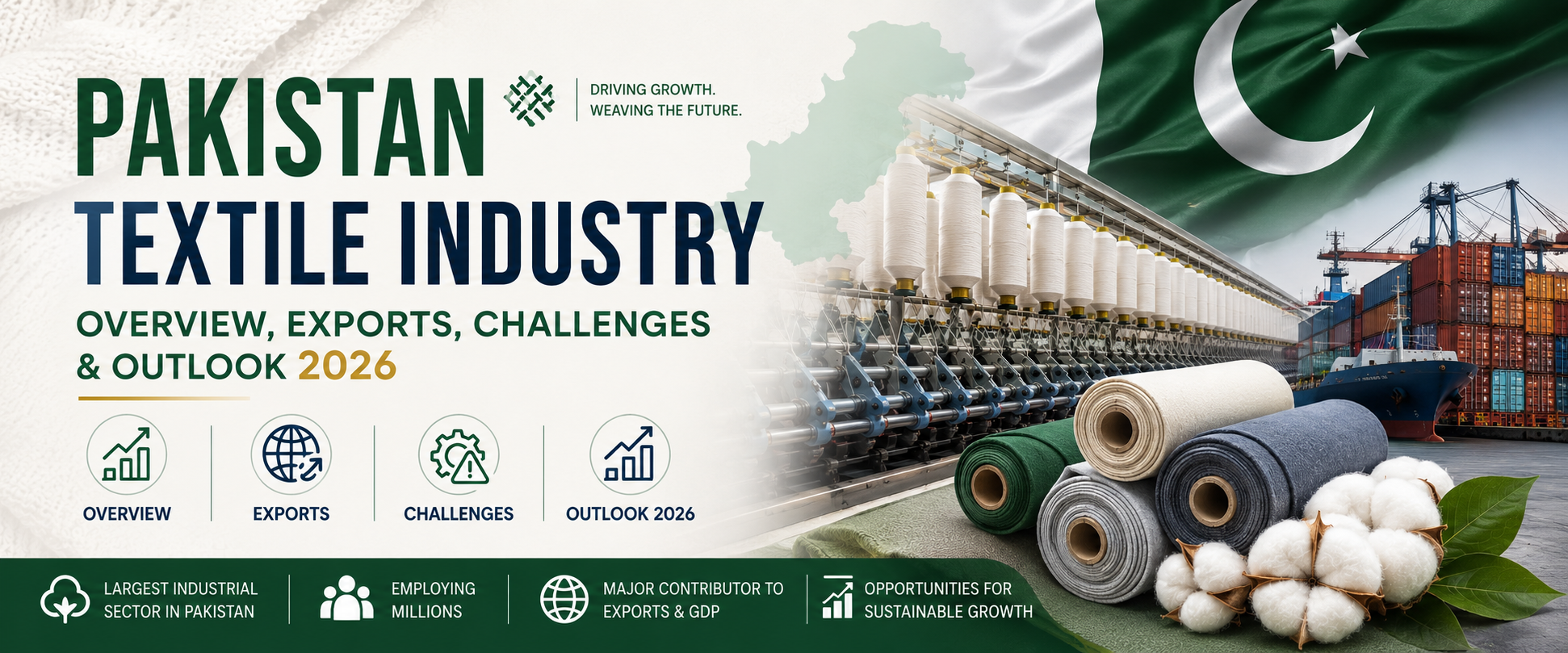
The Pakistan textile industry has long been the backbone of the country’s manufacturing sector. It is the largest industrial segment in Pakistan and plays a central role in exports, employment, investment, and economic growth. From cotton cultivation to garment exports, the industry supports millions of livelihoods and contributes significantly to foreign exchange earnings.
As we move through 2026, the industry is experiencing both opportunities and challenges. Rising global demand for value-added products, investments in technology, and export growth are creating positive momentum. At the same time, energy costs, international competition, taxation concerns, and supply chain issues continue to affect manufacturers.
For students, professionals, investors, and industry stakeholders, understanding the current state of the Pakistan textile industry 2026 is important for making informed decisions about careers, education, and business opportunities.
Institutions such as the Textile Institute of Pakistan continue to play an important role by preparing future professionals with the technical and managerial knowledge required to support the industry’s growth.
Introduction to Pakistan's Textile Industry
The textile sector is the largest manufacturing industry in Pakistan. It covers the complete textile value chain, including cotton production, spinning, weaving, knitting, dyeing, finishing, garment manufacturing, home textiles, and exports.
Pakistan is among the world’s major cotton-producing countries, providing a strong foundation for textile manufacturing. Over the decades, the industry has evolved from basic cotton exports to higher-value products such as garments, knitwear, towels, bedwear, and fashion apparel.
The sector remains one of the most important sources of export revenue for the country, contributing a substantial share of Pakistan’s total exports. According to industry data referenced through export reports and Pakistan Bureau of Statistics releases, textiles consistently account for more than half of Pakistan’s merchandise exports.
The industry’s importance extends beyond exports. Textile manufacturing supports economic activity across agriculture, logistics, retail, fashion, and international trade.
Historical Importance of the Textile Sector
The growth of Pakistan’s industrial economy has always been closely linked to textiles.
Following independence, textile manufacturing became one of the first major industries to develop. The availability of cotton, labor, and export opportunities helped establish Pakistan as a competitive textile producer.
Over time, the industry expanded into:
- Spinning
- Weaving
- Knitting
- Garment manufacturing
- Home textiles
- Technical textiles
- Fashion products
Today, Pakistan exports textile products to markets across North America, Europe, the Middle East, Asia, and Africa.
The sector’s ability to generate foreign exchange continues to make it strategically important for the national economy.
Overview of Pakistan Textile Industry 2026
The Pakistan textile industry 2026 continues to show resilience despite economic and global market challenges.
Recent export data indicate that textile exports have maintained positive momentum over the last two fiscal years, supported by stronger performance in value-added categories such as knitwear, garments, and bedwear. According to Pakistan Bureau of Statistics data reported in 2025, textile exports reached approximately $17.88 billion in FY2024-25, representing growth of 7.39 percent compared to the previous fiscal year.
This growth reflects increasing international demand for Pakistani textile products and stronger performance in export-oriented manufacturing.
Industry experts also note a gradual shift away from reliance on low-value exports toward higher-value finished products.
Structure of Pakistan's Textile Value Chain
The textile industry is made up of several interconnected segments.
Cotton Production
Cotton remains one of the most important raw materials for Pakistan’s textile sector.
The country’s agricultural sector supports textile manufacturing through cotton cultivation, although production levels vary from year to year due to weather conditions and farming challenges.
Spinning Sector
The spinning industry converts cotton into yarn and serves as the foundation for further textile production.
Weaving and Knitting
These segments transform yarn into fabrics used for garments, home textiles, and industrial applications.
Processing
Processing includes dyeing, printing, and finishing operations that improve fabric quality and appearance.
Garment Manufacturing
Garments represent one of the fastest-growing export categories because they offer higher value addition.
Home Textiles
Pakistan has established a strong reputation in global markets for towels, bed sheets, bedding products, and other home textile items.
Textile Export Performance in 2025 and 2026
Exports remain the most important indicator of industry performance.
According to Pakistan Bureau of Statistics data reported in August 2025, textile exports increased from $16.66 billion in FY2023-24 to $17.88 billion in FY2024-25, representing growth of 7.39 percent.
The strongest performing export categories included:
- Knitwear
- Readymade garments
- Bedwear
- Towels
- Synthetic textiles
Ready-made garment exports increased by approximately 15.85 percent, while knitwear exports grew by 13.68 percent during FY2024-25.
These figures demonstrate the growing importance of value-added textile products.
Pakistan Textile Export Statistics
Indicator | Latest Reported Figure | Source |
Textile exports FY2024-25 | $17.88 billion | Pakistan Bureau of Statistics via Economy.pk |
Export growth FY2024-25 | 7.39% | Pakistan Bureau of Statistics via Economy.pk |
Knitwear exports FY2024-25 | $5.01 billion | Pakistan Bureau of Statistics |
Readymade garments exports FY2024-25 | $4.13 billion | Pakistan Bureau of Statistics |
Textile exports Q1 FY2025-26 | $4.774 billion | Pakistan Bureau of Statistics |
Q1 FY2025-26 export growth | 5.63% | Pakistan Bureau of Statistics |
Major Textile Export Markets
Pakistan exports textile products to numerous countries around the world.
Historically, some of the most important export destinations include:
- United States
- Germany
- United Kingdom
- Spain
- China
The United States remains one of the largest buyers of Pakistani textile products, particularly garments, home textiles, and bedwear. Industry export analysis also highlights strong demand from European markets.
Maintaining strong relationships with international buyers remains essential for future export growth.
Contribution to Pakistan's Economy
The textile sector contributes to economic activity in multiple ways.
It supports:
- Manufacturing output
- Export earnings
- Employment
- Agricultural demand
- Foreign exchange reserves
- Industrial investment
Industry analyses consistently identify textiles as Pakistan’s largest export-earning sector and one of its most important industrial employers. Textiles account for over half of national merchandise exports according to industry reports and economic assessments.
This importance means that the health of the textile sector often influences broader economic performance.
Role of Technology in the Textile Industry
Technology is becoming increasingly important in textile manufacturing.
Modern companies are investing in:
- Automated machinery
- Digital printing
- Production monitoring systems
- Data analytics
- Smart manufacturing
- Sustainable production technologies
Recent increases in textile machinery imports suggest renewed investment activity within the sector. Industry reports indicate significant growth in machinery imports, reflecting efforts by manufacturers to improve efficiency and competitiveness.
Technology adoption will remain critical as international buyers continue demanding higher-quality products.
Employment Opportunities in the Industry
The textile industry creates employment opportunities across multiple disciplines.
Career options include:
- Textile Science
- Textile Engineering
- Fashion Design
- Merchandising
- Quality Assurance
- Production Management
- Supply Chain Management
- Marketing
- Product Development
- Export Operations
As companies increasingly focus on value-added products, demand for educated professionals continues to grow.
Institutions such as the Textile Institute of Pakistan help prepare students for these career opportunities through specialized degree programs and industry-focused education.
Major Challenges Facing the Textile Industry
Despite positive export performance, several challenges continue to affect the sector.
Energy Costs
One of the biggest concerns for manufacturers is the cost of electricity and gas.
Higher energy prices can reduce competitiveness compared to regional competitors.
Taxation and Regulatory Issues
Industry groups have expressed concerns regarding taxation policies and their impact on exports and investment. Business leaders have argued that certain tax measures may reduce competitiveness and increase operational costs.
Global Competition
Pakistan competes with countries such as:
- Bangladesh
- China
- India
- Vietnam
- Turkey
These countries continue investing heavily in textile manufacturing.
Cotton Supply Challenges
Fluctuations in cotton production can affect the availability and cost of raw materials.
Economic Uncertainty
Global inflation, changing consumer demand, and international trade conditions continue to influence export performance.
Sustainability and Environmental Responsibility
Sustainability is becoming increasingly important in global textile markets.
International buyers now expect suppliers to adopt responsible manufacturing practices.
Key sustainability priorities include:
- Water conservation
- Energy efficiency
- Waste reduction
- Cleaner production methods
- Responsible sourcing
Companies that successfully adopt sustainable practices may gain stronger access to international markets.
Growth of Value-Added Textiles
One of the most encouraging trends in Pakistan’s textile sector is the growth of value-added exports.
Rather than exporting only raw cotton or basic yarn, companies are increasingly focusing on:
- Garments
- Knitwear
- Home textiles
- Fashion products
- Technical textiles
This shift allows manufacturers to generate higher revenues and improve profitability.
The strong growth in garments and knitwear exports during FY2024-25 supports this trend.
The Role of Education in Industry Growth
The future of Pakistan’s textile industry depends heavily on skilled professionals.
Modern textile businesses require expertise in:
- Textile Science
- Textile Engineering
- Fashion Design
- Product Development
- Sustainability
- Supply Chain Management
- International Marketing
Educational institutions play a critical role in developing this talent.
At the Textile Institute of Pakistan, students gain industry-relevant knowledge through programs focused on textiles, apparel, management, and fashion.
This education helps prepare graduates for leadership roles within the textile sector.
Future Outlook for Pakistan Textile Industry 2026
Looking ahead, the outlook remains cautiously optimistic.
Several factors support future growth:
Continued Export Demand
International demand for garments, knitwear, and home textiles remains strong.
Technology Investment
Modern equipment can improve productivity and product quality.
Product Diversification
Expanding into new textile categories can reduce dependence on traditional products.
New Export Markets
Exploring emerging markets may create additional opportunities.
Skilled Workforce Development
Education and training will strengthen industry competitiveness.
At the same time, challenges such as energy costs and international competition must be addressed to sustain long-term growth.
Industry Opportunities for Students
Students entering the textile sector in 2026 can benefit from a wide range of opportunities.
Growing areas include:
- Textile research
- Product development
- Sustainability management
- Apparel manufacturing
- Fashion merchandising
- Quality assurance
- Export management
As the industry moves toward higher-value products and advanced manufacturing, skilled graduates are expected to remain in demand.
Conclusion
The Pakistan textile industry in 2026 remains one of the country’s most important economic sectors. It continues to drive exports, support employment, and generate foreign exchange earnings despite a challenging global business environment.
Recent export figures show encouraging growth, with textile exports reaching approximately $17.88 billion in FY2024-25, supported by strong performance in garments, knitwear, and bedwear. Pakistan Bureau of Statistics data also indicates continued export activity during FY2025-26, highlighting the sector’s resilience.
While challenges such as energy costs, taxation concerns, and global competition remain significant, investments in technology, sustainability, and workforce development provide reasons for optimism.
For students considering careers in textiles, fashion, manufacturing, or business, the industry offers substantial opportunities for growth and professional success. Institutions such as the Textile Institute of Pakistan continue to support the industry’s future by preparing the next generation of textile professionals who will help shape Pakistan’s industrial and export landscape in the years ahead.


