
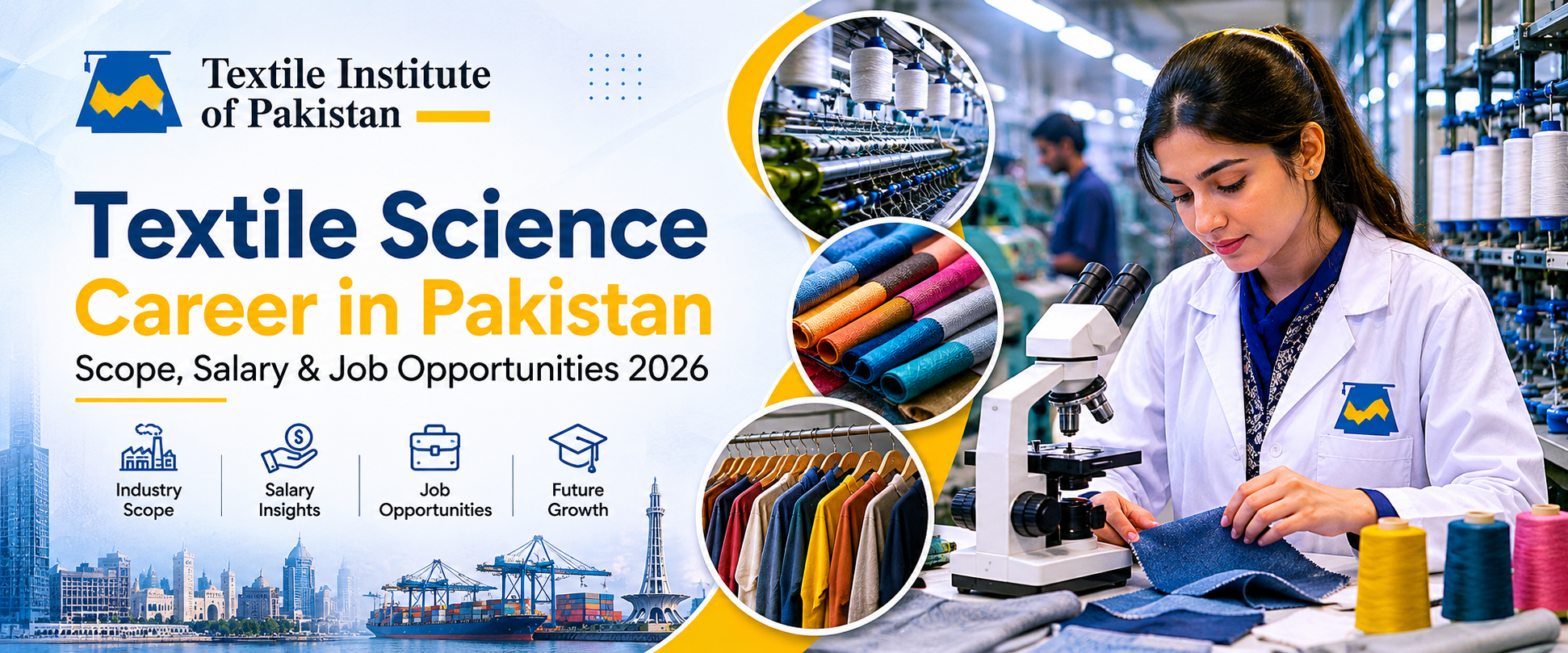
Pakistan is known around the world for its textile industry. From cotton production to garment exports, textiles play a major role in the country’s economy. Every year, thousands of students look for degree programs that can help them build a stable and rewarding future. One of the most promising options today is a Sustainable Textiles career in Pakistan.
The textile sector is not only one of the largest industries in the country, but it is also one of the biggest employers. As the industry continues to grow in 2026, companies are looking for skilled graduates who understand textile manufacturing, fabric technology, quality control, dyeing, research, and product development.
For students who are interested in science, innovation, fashion, production, or industrial management, Sustainable Textiles can open many career paths. With modern factories, export companies, and international brands operating in Pakistan, there is a strong demand for trained textile professionals.
Institutions like Textile Institute of Pakistan are helping students prepare for this growing industry through specialized degree programs and practical learning opportunities. The institute offers a dedicated Sustainable Textiles program that focuses on textile manufacturing, fiber science, fabric technology, textile testing, dyeing, finishing, and research.
In this blog, we will discuss the scope of Sustainable Textiles in Pakistan, salary expectations, career opportunities, required skills, future industry trends, and why this field is becoming one of the best career choices in 2026.
What is Sustainable Textiles
Sustainable Textiles is the study of fibers, fabrics, yarns, textile chemicals, textile production methods, and fabric performance. It combines science, technology, and industrial processes to create textile products used in clothing, home textiles, sportswear, medical products, and many other industries.
Students in Sustainable Textiles learn about:
- Natural and synthetic fibers
- Yarn manufacturing
- Fabric development
- Textile chemistry
- Dyeing and printing
- Textile testing
- Smart textiles
- Quality assurance
- Textile research
- Sustainable textile production
The field is highly practical and industry focused. Students spend time in laboratories, testing facilities, and industrial projects to gain real experience.
According to the Sustainable Textiles program offered by TIP Pakistan, students study courses related to textile chemistry, polymer science, weaving, spinning, knitting technology, textile dyeing, smart textiles, textile printing, finishing, and textile research projects.
Why Sustainable Textiles is Important in Pakistan
Pakistan’s economy depends heavily on textiles. The textile sector contributes a large share of exports and provides employment to millions of people across the country.
The growth of textile exports means companies need qualified professionals who can improve production quality, increase efficiency, and introduce modern technologies.
The importance of textile science in Pakistan can be understood through the following points:
Strong Industrial Base
Pakistan has thousands of textile mills, garment factories, dyeing units, and export companies operating in cities like Karachi, Faisalabad, Lahore, and Multan.
High Export Demand
Pakistan exports textile products to Europe, America, the Middle East, and many other regions. International buyers require better quality standards and advanced textile knowledge.
Demand for Skilled Professionals
Factories now prefer graduates with technical education instead of untrained workers. Sustainable Textiles graduates are needed for production management, quality testing, product development, and research.
Modern Technology Integration
The textile industry is becoming more technology based. Automated machines, digital printing, smart fabrics, and sustainable production systems are increasing the need for educated professionals.
Sustainable Textile Development
Many international companies now focus on eco friendly production methods. Sustainable Textiles graduates help industries reduce waste, improve efficiency, and follow international standards.
Sustainable Textiles Career in Pakistan
The Sustainable Textiles career in Pakistan offers opportunities in many sectors. Graduates can work in production, management, research, exports, quality control, merchandising, and textile engineering departments.
Unlike many traditional degrees where students struggle to find jobs, textile science graduates often get industry exposure during their studies. This helps them secure employment quickly after graduation.
Some of the major industries hiring textile science graduates include:
- Textile mills
- Garment factories
- Export houses
- Fabric manufacturing companies
- Home textile companies
- Denim industries
- Fashion brands
- Textile testing laboratories
- Research centers
- Chemical industries
- Retail textile companies
Pakistan’s textile industry is expected to continue growing in 2026 due to increasing export targets and international demand. This creates strong career opportunities for graduates.
Scope of Sustainable Textiles in Pakistan 2026
The scope of Sustainable Textiles in Pakistan is increasing every year. The industry is moving toward innovation, quality improvement, and international competitiveness.
Here are some reasons why the field has excellent scope in 2026:
Growing Textile Exports
Pakistan continues to increase textile exports globally. Companies require skilled employees who understand textile production and quality standards.
Expansion of Apparel Industry
The apparel and fashion manufacturing sector is growing rapidly. Sustainable Textiles graduates are needed for fabric sourcing, production management, and quality assurance.
Smart Textile Development
Smart fabrics and performance textiles are becoming popular worldwide. Sustainable Textiles graduates with technical knowledge have better opportunities in modern manufacturing.
Research and Development Opportunities
Companies are investing in product development and textile research to compete internationally.
International Career Opportunities
Sustainable Textiles graduates from Pakistan can also work abroad in countries with strong textile industries such as China, Turkey, Bangladesh, the UAE, and European countries.
Entrepreneurship Potential
Many graduates start their own textile businesses, clothing brands, printing units, or export companies after gaining industry experience.
Top Career Opportunities After Sustainable Textiles
A Sustainable Textiles degree can lead to many career paths depending on your interests and skills.
Textile Production Manager
Production managers supervise textile manufacturing processes and ensure production targets are achieved efficiently.
Quality Control Officer
Quality control professionals test fabrics, garments, and textile products to maintain standards required by local and international buyers.
Textile Research Associate
Research associates work on fabric innovation, fiber development, textile chemicals, and sustainable production techniques.
Textile Designer
Graduates interested in creativity can work in textile design and fabric development.
Merchandiser
Textile merchandisers communicate with buyers, manage orders, and coordinate production schedules.
Dyeing and Finishing Specialist
These professionals handle textile coloration, finishing treatments, and chemical applications.
Fabric Technologist
Fabric technologists analyze textile performance, durability, comfort, and quality.
Textile Testing Officer
Testing officers work in laboratories to evaluate fabric quality and compliance with standards.
Export Manager
Export managers handle international textile shipments and buyer relationships.
Supply Chain Officer
Supply chain professionals manage raw materials, inventory, and logistics.
Lecturer or Researcher
Graduates can continue higher education and become university lecturers or researchers.
Salary of Sustainable Textiles Graduates in Pakistan 2026
One of the biggest concerns students have is salary potential. The good news is that Sustainable Textiles offers stable earning opportunities in Pakistan.
Salaries depend on factors such as:
- Education level
- Skills
- Experience
- Company size
- City
- Technical expertise
Here is an estimated salary range for textile science professionals in Pakistan in 2026:
Job Position | Monthly Salary Estimate |
Trainee Textile Officer | PKR 45,000 to 70,000 |
Quality Control Officer | PKR 60,000 to 100,000 |
Textile Production Officer | PKR 70,000 to 120,000 |
Merchandiser | PKR 80,000 to 150,000 |
Textile Designer | PKR 60,000 to 140,000 |
Dyeing Specialist | PKR 90,000 to 180,000 |
Textile Engineer | PKR 100,000 to 200,000 |
Production Manager | PKR 180,000 to 350,000 |
Export Manager | PKR 200,000+ |
Professionals working in multinational companies or export based organizations often earn higher salaries.
Graduates with strong technical skills and industrial experience usually progress quickly in their careers.
Skills Required for a Successful Sustainable Textiles Career
Students who want to succeed in Sustainable Textiles should develop both technical and soft skills.
Technical Knowledge
Understanding textile manufacturing processes is very important.
Problem Solving Ability
Factories face production challenges daily. Professionals who can solve problems are highly valued.
Communication Skills
Textile professionals often work with teams, suppliers, and international buyers.
Research Skills
Innovation and product development require research based thinking.
Computer Skills
Modern textile industries use digital systems and automated software.
Teamwork
Most textile operations involve coordination between departments.
Attention to Detail
Quality control and textile testing require accuracy.
Best Institute for Sustainable Textiles in Pakistan
Choosing the right university is very important for career success.
One of the recognized institutes for textile education in Pakistan is the Textile Institute of Pakistan.
The institute focuses on practical learning, industrial exposure, and research based education. According to the official TIP website, the institute offers programs designed to prepare students for careers in textile manufacturing, fashion, management, and apparel industries.
The Sustainable Textiles program includes subjects related to:
- Fiber science
- Textile chemistry
- Fabric technology
- Textile testing
- Smart textiles
- Dyeing and finishing
- Research projects
- Environmental management
Students also gain exposure to industrial practices and practical laboratory work.
TIP also highlights strong industry connections and collaborations with leading textile companies in Pakistan.
Future of Sustainable Textiles in Pakistan
The future of Sustainable Textiles in Pakistan looks very promising.
Several trends are shaping the future of the industry:
Sustainable Production
Global brands prefer eco friendly production methods. Sustainable Textiles graduates can help industries reduce environmental impact.
Smart Fabrics
Technology based textiles are becoming popular worldwide.
Digital Manufacturing
Modern textile factories are using automation and advanced machinery.
Technical Textiles
Textiles are now used in healthcare, sports, automobiles, and construction industries.
Research and Innovation
Companies are investing more in fabric research and product development.
As Pakistan continues to improve its textile exports and industrial standards, skilled professionals will remain in demand.
Challenges in Sustainable Textiles Careers
Like every field, Sustainable Textiles also has some challenges.
Competitive Industry
Students need strong skills and practical knowledge to stand out.
Continuous Learning
Technology changes quickly, so professionals must continue learning.
Industrial Pressure
Production environments can sometimes be demanding.
Quality Standards
International buyers require strict quality compliance.
However, students who are hardworking and technically skilled can build excellent careers despite these challenges.
Is Sustainable Textiles Better Than Other Degrees?
Many students compare Sustainable Textiles with engineering, business, or computer science.
The truth is that every field has opportunities for skilled professionals. However, Sustainable Textiles has some unique advantages in Pakistan because the textile sector is directly connected to the country’s economy.
Unlike fields with oversaturation problems, textile industries still need trained professionals who understand manufacturing and production systems.
Recent discussions on Pakistani online communities also highlight how industries now value practical skills and strong academic programs rather than only popular degree names. (Reddit)
Students who choose textile science from a recognized institute and focus on practical learning can build strong careers in Pakistan and abroad.
Higher Education Opportunities After Sustainable Textiles
After completing Sustainable Textiles, students can continue higher studies in specialized fields such as:
- MS Sustainable Textiles
- Textile Engineering
- Textile Chemistry
- Fashion Technology
- Apparel Manufacturing
- Supply Chain Management
- Industrial Management
- Textile Research
Universities in Pakistan and abroad offer advanced degree programs related to textiles and industrial innovation.
Higher education improves career growth and salary potential.
Tips for Students Interested in Sustainable Textiles
If you are planning to pursue a Sustainable Textiles career in Pakistan, these tips can help you succeed:
Focus on Practical Learning
Industrial knowledge is very important in this field.
Improve Communication Skills
Good communication helps during interviews and professional work.
Learn About Textile Technology
Stay updated with modern textile trends and machinery.
Build Industry Connections
Internships and networking can help you secure better jobs.
Develop Research Skills
Research based learning improves innovation and problem solving ability.
Choose the Right Institute
A recognized institute with industrial exposure can make a huge difference in your career.
Why Students are Choosing Sustainable Textiles in 2026
Students in Pakistan are now looking for career options that offer stability, industrial demand, and future growth.
Sustainable Textiles has become attractive because:
- Pakistan has a strong textile industry
- Jobs are available in multiple sectors
- Export industries need skilled graduates
- Salaries improve with experience
- Opportunities exist in Pakistan and abroad
- Technical skills remain valuable
- The industry supports innovation and research
With proper education and dedication, textile science graduates can achieve long term career success.
Conclusion
The Sustainable Textiles career in Pakistan is becoming one of the most valuable career options in 2026. Pakistan’s textile industry continues to grow, creating strong demand for skilled professionals in manufacturing, quality control, research, merchandising, and management.
Students who are interested in science, technology, fabrics, innovation, and industrial processes can find excellent opportunities in this field. From production management to textile research, the career paths are diverse and rewarding.
Institutions like Textile Institute of Pakistan are helping students prepare for successful careers through specialized programs, practical training, and industry focused education. The institute’s Sustainable Textiles program covers modern textile technologies, research, quality testing, and production systems that match industry needs. (Textile Institute of Pakistan)
As the textile sector continues expanding in Pakistan and globally, textile science graduates will remain important for industrial growth, innovation, and export success.
For students searching for a practical, stable, and future focused profession, textile science can be an excellent career choice in Pakistan.


