
Chancellor’s Message
“It was best of times, it was the worst of times”, reads the opening line of a well-known 18th century novel by Charles Dickens. These words ring true for today’s times as well, as two significant developments, the rapid strides in the use of artificial intelligence as well as the environmental degradation and the ushering of the Anthropocene age, take us into a new terrain.
I mention these two developments for they are particularly relevant to the Textile Industry. The growing knowledge about the need to take care of the environment is causing great concern along with significant innovations in the field of textiles. The quest is to embrace sustainable practices, such as waste reduction, water management, renewable energy adoption, recycling, eco-friendly dyes and so on. This field requires bright, dynamic, and inquisitive young minds able to understand and then develop ways to mitigate the environmental degradation and take the industry forward.
Secondly, the use of artificial intelligence is poised to make significant changes worldwide in every field. Already, AI design tools are being used to streamline the product development process.

In the manufacturing process, robotics and automation powered by AI are available to enhance productivity. AI driven predictive analysis and demand forecasting can help with the inventory and supply chain. To help with the goal of taking care of the environment, machine learning algorithms can assist with minimising waste productions, facilitate the development of eco-friendly materials and recycling technologies. Moreover, customer experience and personalisation will continue to be tailored more precisely as these technologies grow.
Textile is a field that contributes towards a major chunk of Pakistan’s foreign exchange earnings, as it is one of the country’s largest export sectors. Moreover, worldwide, the demand for textiles is expected to continue to grow. These combined factors make the textile industry a very dynamic place. To keep Pakistan competitive in the international market, we need to continue to develop expertise in this area.
If the field of textiles interests you, come and visit the Textile Institute’s campus. Our friendly faculty and students are there to answer your questions. I wish you all the very best as you explore opportunities in higher education.
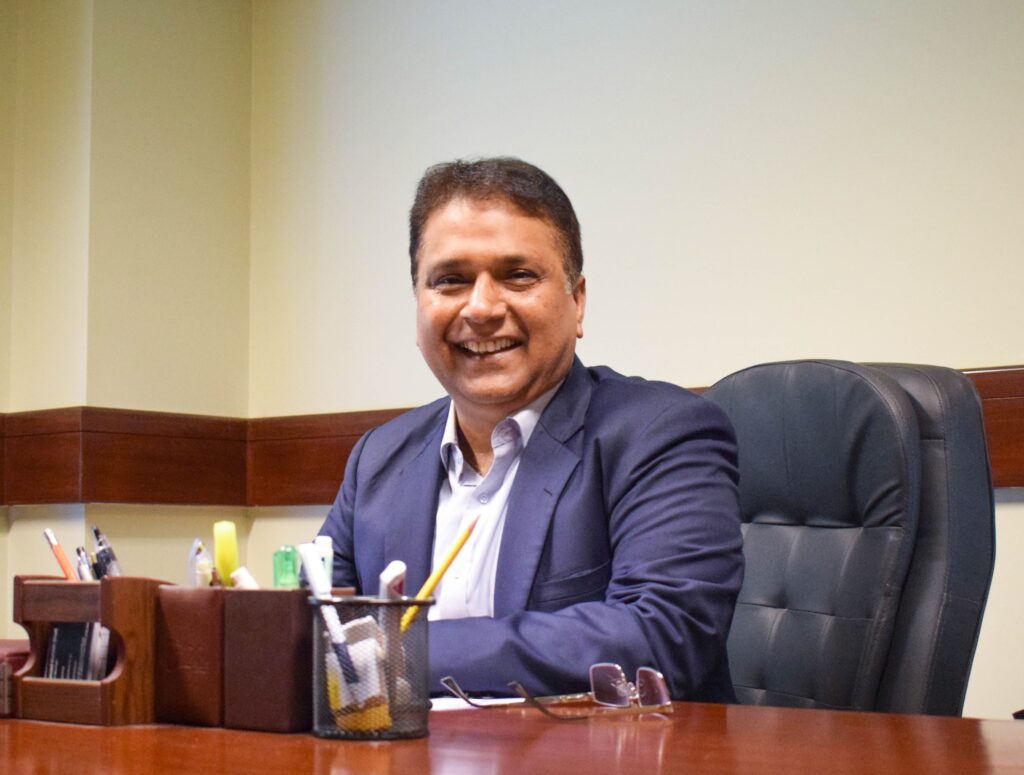
President's Message
At the Textile Institute of Pakistan, we hold a firm conviction: Education must evolve continuously to meet the demands of a rapidly transforming world. True learning is never a burden — it is an invitation to wonder. When education is infused with purpose and genuine engagement, it ceases to be a transaction and becomes a lifelong transformation.
As we move deeper into the 21st century, the global educational landscape is undergoing a decisive shift — from knowledge-based systems toward competency-based learning. While knowledge remains a vital foundation, the true measure of an educated individual today lies in their capacity for critical thinking, adaptability, and the ability to generate tangible outcomes in professional and societal contexts. The future belongs to those who do not merely acquire information, but who apply it with wisdom and intent.
This imperative demands that higher education transition from traditional input-based models toward output-based systems. The emphasis can no longer rest solely on classroom hours, attendance records, or rigid academic structures. Instead, our institutions must ask the more meaningful question: what are our graduates capable of building, contributing, and transforming? Education must empower learners to become solution-oriented professionals — prepared, resilient, and ready for the real world.
“Higher Educational Institutes must serve as thought engines for society — spaces that stimulate intellectual discourse, nurture analytical minds, and cultivate a deeper understanding of humanity, industry, and progress.”
In this era of Artificial Intelligence, generative tools, and the emerging frontier of Artificial General Intelligence (AGI), the very role of educators is being redefined. Teachers are no longer sole custodians of information — knowledge today is universally and instantaneously accessible. The true calling of an educator has evolved: to become a thought leader — a guide who teaches students how to think, how to question, how to analyze, and how to grow. Cultivating critical thinking and intellectual self-awareness is no longer optional — it is indispensable for the leaders of tomorrow.
Since 1994, the Textile Institute of Pakistan has proudly served Pakistan’s textile and allied sectors as a niche institution devoted to academic excellence and deep industry relevance. As we look toward the next thirty years, our mission is resolute: to develop thought leaders who will drive innovation, sustainability, and progress within the textile industry and far beyond — contributing meaningfully to Pakistan’s knowledge economy and fulfilling the enduring vision of our founders.
At TIP, we remain steadfastly committed to building an intellectually vibrant ecosystem — one where education is purposeful, transformative, and uncompromisingly future-ready. I invite each of you — our students, faculty, industry partners, and well-wishers — to be part of this journey.
Prof. Dr. Salman Abbasi


