Director’s Message
- To take correct guidelines for a result-oriented way of technical education for the improvement of constructive changes with new concepts and ideas in the industrial sector.
- To initiate practical activities and guidelines for cost-effective production through interaction between students verses students and faculty verses students for fresh ideas, concepts and concrete suggestions.
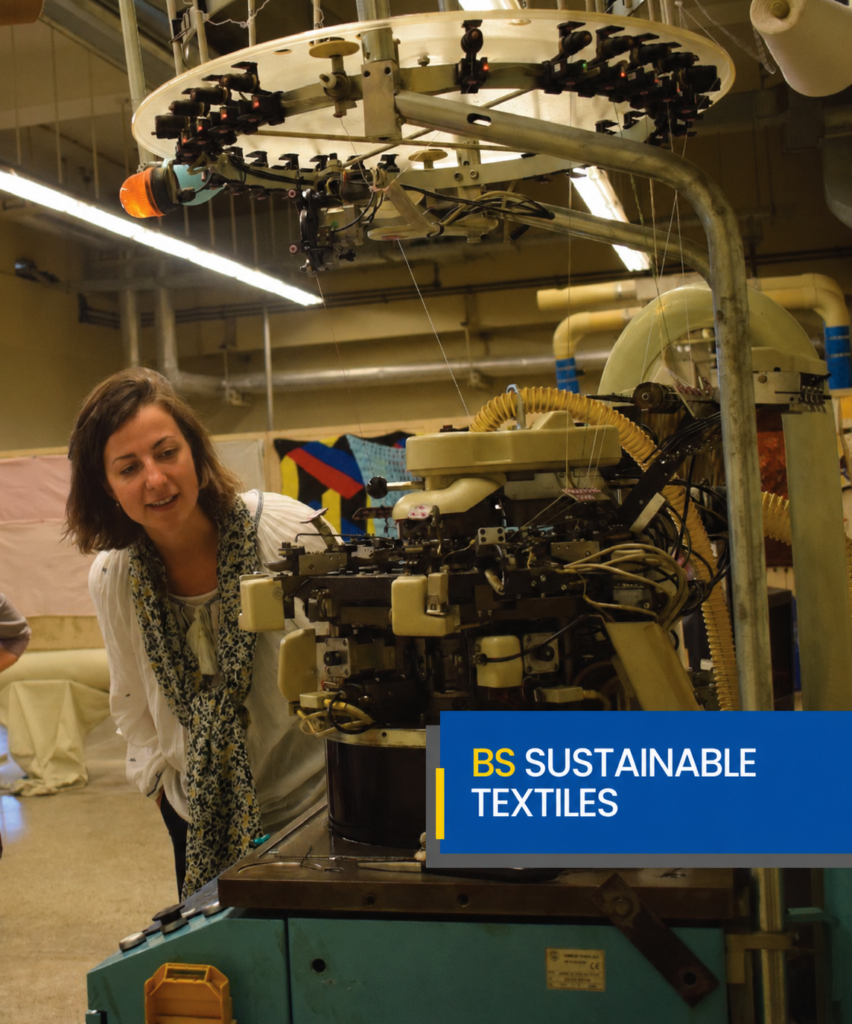
BS Sustainable Textile Science
Shape the future of textiles through science, innovation, and sustainability. This program equips you with a comprehensive understanding of sustainable fibres, textile materials, manufacturing processes, and advanced testing techniques while integrating circular economy principles, environmental stewardship, and emerging technologies. Through industry-focused learning, research, and hands-on laboratory experience, you’ll develop the expertise to design, evaluate, and innovate sustainable textile solutions that drive the transformation of the global textile industry.

Admission Criteria
We require candidates to meet the minimum entry test requirements for our undergraduate programs.

Test Guidelines
Admission test and interview are crucial for selecting undergraduate candidates. Priority is given to those who excel in these assessments.

Financial Aid
The Textile Institute of Pakistan ensures that deserving students can pursue their academic goals unhindered by financial constraints.
Curriculum Structure and Courses
The BS Sustainable Textile Science curriculum integrates textile science with sustainability, innovation, and emerging technologies to prepare graduates for the future of the global textile industry. Students develop a strong foundation in sustainable fibre science, textile materials, yarn and fabric manufacturing, wet processing, textile testing, quality assurance, and product development while exploring circular economy principles, life cycle assessment, environmental management, and resource-efficient production. The curriculum also incorporates green chemistry, textile recycling, advanced textile characterization, data-driven quality control, and Industry 4.0 applications. Through laboratory-based learning, industrial projects, research activities, and internships, students gain the analytical, technical, and problem-solving skills required to develop innovative, sustainable textile solutions and lead the transition towards a more responsible and resilient textile sector.
| Course Code | Course Title | Credit Hours |
| COMP-101 | Computer Concepts | 3 |
| ENGL-101 | English Language Basics | 3 |
| TXCH-102 | General Chemistry | 4 |
| MATH-101 | Mathematics-I | 3 |
| TEXT-175 | Introduction to Textile Manufacturing | 3 |
| 16 |
| Course Code | Course Title | Credit Hours |
| RELG-100/200 | Religion | 2 |
| COMP-102 | Computer Applications | 3 |
| ENGL-102 | English Composition | 3 |
| MATH-102 | Mathematics-II | 3 |
| TEXT-176 | Natural & Manmade Fibres | 3 |
| TXCH-104 | Organic Chemistry | 4 |
| 18 |
| Course Code | Course Title | Credit Hours |
| PKST-100/200 | Pakistan Studies | 2 |
| ECON-201 | Business Economics | 3 |
| ENGL-201 | Oral Communication | 2 |
| MGMT-201 | Principles of Management | 3 |
| PHYS-201 | Conceptual Physics | 4 |
| TEXT-201 | Yarn Formation | 3 |
| MTSC-215 | Polymer Science | 4 |
| 18 |
| Course Code | Course Title | Credit Hours |
| ECON-201 | Business Economics | 3 |
| MATH-202 | Business Maths & Statistics | 3 |
| TEXT-202 | Fabric Technology | 3 |
| TEXT-220 | Textile Testing | 2 |
| BUSS-250 | Business Communication | 3 |
| TXCH-250 | Textile Pre-treatment& Machinery | 4 |
| 18 |
| Course Code | Course Title | Credit Hours |
| MRKT-301 | Principles of Marketing | 3 |
| TEXT-301 | Spinning Mechanisms | 3 |
| TXCH-304 | Textile Dyeing-I | 4 |
| TEXT-312 | Weaving Mechanisms | 3 |
| MGMT-390 | Production & Operations Management | 3 |
| 16 |
| Course Code | Course Title | Credit Hours |
| MGMT-301 | Research Methodology | 3 |
| TEXT-302 | Knitting Technology | 3 |
| TEXT-303 | High Performance& Smart Textiles | 3 |
| TEXT-312 | Introduction to Weave Designs | 3 |
| TXCH-316 | Textile Dyeing II | 4 |
| 16 |
| Course Code | Course Title | Credit Hours |
| ENVT-401 | Environmental Management | 3 |
| TEXT-428 | Textile Research Project | 3 |
| TXCH-457 | Textile Printing & Coating | 4 |
| Elective I | 3 | |
| Elective II | 3 | |
| 16 | ||
| Course Code | Course Title | Credit Hours |
| TXCH-422 | Fiber Science | 4 |
| TEXT-428 | Textile Research Project | 3 |
| TXCH-458 | Textile Finishing | 4 |
| Elective III | 3 | |
| Elective IV | 3 | |
| 17 | ||
| Course Code | Course Title | Credit Hours |
| APRL-401 | Apparel Manufacturing | 3 |
| TEXT-403 | Advanced Fibre Processing | 3 |
| TEXT-411 | Advanced Woven Fabric Structure& Design | 3 |
| Course Code | Course Title | Credit Hours |
| MRKT-401 | Export Marketing | 3 |
| TEXT-405 | Textile Merchandizing | 3 |
| TEXT-471 | Plant Layout & Design | 3 |

Fee Structure
Our competitive fee structure, encompassing tuition, transportation, hostel, insurance, and others are detailed here.
Program Faculty
Dr. Adnan Amjad
Position: Assistant Professor and Program Coordinator– Sustainable Textiles
Categories: Faculty
PhD in Textile-Based Composite Materials from Universiti Sains Malaysia, with research in advanced materials, sustainable textiles, and nanocomposites. Brings global academic and industrial experience from Malaysia and Pakistan, including roles in textile R&D and production management. Published in top-tier international journals and recipient of the Sanggar Sanjung Award (Malaysia) and HEC HRDI Scholarship.